Visitation Policy

Each residence hall is designated as Self-Regulated visitation. Visitation is defined as periodic visits by a guest and does not include cohabitation. A guest is defined as someone who is not assigned to the residence hall room, suite, apartment, or residence hall in which that person is located.

Visitation determines when and if residents may have guests in their rooms. Visitors are permitted during specified hours only in accordance with Housing visitation policies and the roommate/suitemate agreement. Visitation may be revoked for individuals or groups in living units where continued violations of the agreed upon limitations to visitation on the roommate agreement occur.

Visitation Options

Visitation within student rooms, including hours when visitation is permitted, is determined by mutual agreement among roommates at the beginning of the year and whenever occupancy of the room changes. Roommates have the right to refuse guest in their room (for safety or any other reasons).

Self–Regulated Visitation

  • All residence halls and on-campus apartments have self-regulated visitation.
  • This option allows guests to visit, if agreed to in the roommate agreement.

Guest Policies

Guests are permitted in the halls only at the request of residents, who then become responsible for the conduct of their visitors. Guests must remain in the company of their resident host throughout their visit and must be escorted at all times. All guests must abide by university and hall regulations applicable to the resident host. The presence of guests of either gender shall not deny access or entry into the living unit, nor shall visitation cause any undue hardship on any other resident of the room, suite, or apartment.

Guest Entry

All entrances to residence halls are locked twenty-four hours a day. Telephones at the main entrance of each hall allow guests to call their host or the residence hall front office to enter the hall.

Overnight Guests

Residents may have overnight guests in the halls with the permission of their roommate(s) and suitemate(s). Guests may not stay for more than three days in any 30-day period without written permission from the Residence Coordinator or Assistant Coordinator. Cohabitation is not permitted in any residence hall.

Ragans Hall

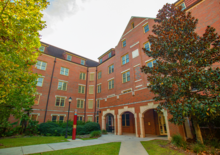
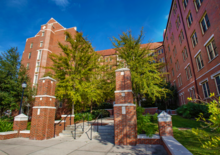
Sherrill Williams Ragans retired in 2003 after more than 40 years at Florida State University. Having served as a Residence Counselor and Director of University Housing, S.W. Ragans finished her tenure at Florida State as the Associate Vice President for Student Affairs. Originally named New Hall, S.W. Ragans Hall received its namesake in a rededication ceremony in November 2006.
Wildwood Hall

Wildwood Hall was named after the street it was built on. The building is in a great location of campus as you can hear the Marching Chiefs practicing in the fall and see the circus tent from your window. Some are even lucky enough to have a view of Doak Campbell Stadium.

Traditions Hall

Traditions Hall was opened in July 2012. Apartment style housing was chosen in order to provide upperclassmen at Florida State University with additional on-campus housing options. Located in central campus, residents are only steps away from Bobby E. Leach Student Recreation Center and Doak S. Campbell Stadium can be seen from your windows. Traditions Hall is a LEED Certified Building.

Salley Hall

Nathanial Moss Salley served on the faculty of the Florida State College for Women for thirty-five years, and as Dean of the School of Education from 1917 - 1937. Salley hall was built in 1962 and housed the FSU football team. The building was the first on campus to become co-ed and was renovated in 2000.

Rogers Hall

Dr. William Hudson Rogers taught in the English Department from 1922 - 1957 and was the first Distinguished Professor at Florida State University. Originally designed to house married students, Rogers Hall is now home to 172 upperclassmen.

Reynolds Hall

Celebrating its opening in 1913, Reynolds Hall was named for Mrs. William H. Reynolds, the Lady Principal for Florida Female College from 1905 - 1909. The architects who originally designed Reynolds Hall created the elaborately decorate main entrance as a warm greeting for students. Reynolds Hall was renovated in 1996.

McCollum Hall

Edith McCollum served as the Director of Housing at the Florida State College for Women/Florida State University from 1941 - 1970. McCollum Hall was completed and occupied before receiving its name, simply known as "Hall X" until given its namesake. McCollum Wall was renovated from 2005 to 2011.

Magnolia Hall

The original Magnolia Hall was built in 1944. It was razed in 1979, and the new Magnolia Hall opened in fall 2017. The name of this hall is not only reflective of the beautiful foliage around the Florida State University campus, but also re-establishes the name of a residence hall that once existed near this location.

Landis Hall

Landis Hall was completed in 1939 and was originally designed as a Seniors Hall. The women in Landis had later curfew hours than underclassmen, and had the special privilege of having a smoking parlor, the only one on campus. The building later became a co-ed and freshman-only facility. Now home to the University Honors Program Housing, Landis Hall is named for Cary D. Landis, who was an Attorney General for two terms for the State of Florida.