Visitation Policy

Each residence hall is designated as Self-Regulated visitation. Visitation is defined as periodic visits by a guest and does not include cohabitation. A guest is defined as someone who is not assigned to the residence hall room, suite, apartment, or residence hall in which that person is located.

Visitation determines when and if residents may have guests in their rooms. Visitors are permitted during specified hours only in accordance with Housing visitation policies and the roommate/suitemate agreement. Visitation may be revoked for individuals or groups in living units where continued violations of the agreed upon limitations to visitation on the roommate agreement occur.

Visitation Options

Visitation within student rooms, including hours when visitation is permitted, is determined by mutual agreement among roommates at the beginning of the year and whenever occupancy of the room changes. Roommates have the right to refuse guest in their room (for safety or any other reasons).

Self–Regulated Visitation

  • All residence halls and on-campus apartments have self-regulated visitation.
  • This option allows guests to visit, if agreed to in the roommate agreement.

Guest Policies

Guests are permitted in the halls only at the request of residents, who then become responsible for the conduct of their visitors. Guests must remain in the company of their resident host throughout their visit and must be escorted at all times. All guests must abide by university and hall regulations applicable to the resident host. The presence of guests of either gender shall not deny access or entry into the living unit, nor shall visitation cause any undue hardship on any other resident of the room, suite, or apartment.

Guest Entry

All entrances to residence halls are locked twenty-four hours a day. Telephones at the main entrance of each hall allow guests to call their host or the residence hall front office to enter the hall.

Overnight Guests

Residents may have overnight guests in the halls with the permission of their roommate(s) and suitemate(s). Guests may not stay for more than three days in any 30-day period without written permission from the Residence Coordinator or Assistant Coordinator. Cohabitation is not permitted in any residence hall.

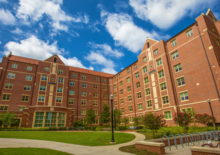
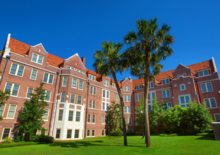
Gilchrist Hall

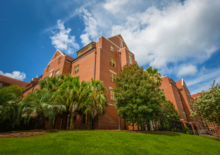
Gilchrist Hall was named in honor of Brigadier General Albert Waller Gilchrist who served in the Florida Militia during the Spanish-American War, and as Governor of Florida from 1908-1912. Gilchrist Hall was completed in 1920 as a women's residence hall and connects to all the original halls through a series of arcades. It was renovated in 1998.
Dorman Hall

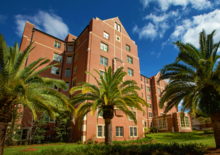
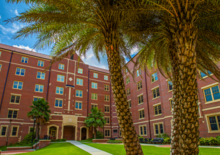
The original Dorman Hall was built in 1952 and is named for Olivia Dorman, who was the Dean of Students and a classics professor at the Florida State College for Women for twenty-five years, It was razed and rebuilt in 2015 by a brand-new Dorman Hall.

Deviney Hall

The original Deviney Hall was built in 1952 and named in honor of Ezda May Deviney. Dr. Deviney was a member of the Florida State College for Women faculty for thirty-three years, including fifteen years as head of the Department of Zoology. It was razed and replaced in 2015 by a brand-new Deviney Hall. Dorman and Deviney Halls are both LEED Certified Buildings.

DeGraff Hall

DeGraff Hall was built in 1950 and dedicated in 1961 in honor of Dr. Mark A. DeGraff, a professor of education at FSU for over thirty years. It was razed in 2005 and rebuilt in 2007.

Bryan Hall

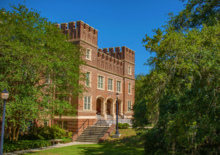
William James Bryan, who studied law and was appointed US Senator in 1907, is the namesake for Bryan Hall. With battlements along the roof's edge and twin squared towers, the hall appears fortress-like. Yet the low, wide-railed steps that lead to the triple arcade entrance give an inviting appearance. Bryan is the oldest residence hall on campus.

Broward Hall

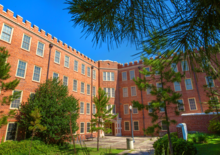
Broward Hall was built for the Florida State College for Women in 1917, and was named after Napoleon Bonaparte Broward who served as Governor of Florida from 1904–1908. Governor Broward was instrumental in passing the Buckman Act which created two state funded colleges, one in Tallahassee and one in Gainesville. Arcades connected Broward to existing buildings so that women could remain indoors when traveling to the dining hall (now the William Johnston Building).

Cawthon Hall

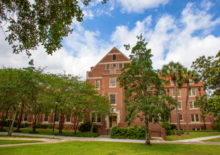
Sarah Lundrum Cawthon was Dean of the College Home for fifteen years. She initiated the Student Government Association at the Florida State College for Women, and was a leader in the expansion of the American Association of University Women. Cawthon Hall was renovated in 2001.

Azalea Hall

Azalea Hall opened in June 2017. The name Azalea was chosen to reflect the beautiful foliage around campus. The dining venue, 1851, is located on the ground floor of this building.